The short version
- Put a protein at the center of every dinner: beans, lentils, eggs, tofu, cheese or chickpeas.
- Cook one pot of beans or grains on a calm night and use it in two dinners.
- Pick dinners that share their vegetables, so nothing wilts in the drawer.
- If someone eats meat, cook the vegetarian base and add the meat on the side.
A week of vegetarian dinners tends to go wrong in one of two ways. Every night is pasta with vegetables and everyone is hungry again by nine, or the week has five unrelated recipes and by Friday half a bag of spinach and half a cabbage are going soft in the drawer.
This guide is the vegetarian version of our weekly meal planning routine. It shows how to build each dinner around a protein, cook a pot of beans or grains once for two nights, pick dinners that share their vegetables and still feed the one person at the table who eats meat. It ends with a sample week of five dinners and the grocery list that goes with it.
What Changes When the Week Is Vegetarian
The routine is the same as for any week: choose the dinners, check what you have, write one list. A few things need more attention when there is no meat.
- Protein needs a plan. In a meat week the chicken or the beef is the center of the plate. Take it away and put nothing in its place, and dinner turns into a side dish.
- Beans and grains take time. Dried beans need soaking and an hour on the stove, and brown rice or barley take longer than pasta. Cooked once for two dinners, they stop being a weeknight problem.
- Vegetables carry more of the week. More of the list is fresh produce, and fresh produce goes off. Five dinners that each need a different herb or green waste the most.
- Not everyone at the table may be vegetarian. Plenty of households have one person who eats meat, and nobody wants to cook two dinners every night.
Step 1: Give Every Dinner a Protein
Before you pick recipes, decide what each night’s protein is. These are the usual ones in a vegetarian kitchen:
- Beans and chickpeas. Black beans, kidney beans, white beans and chickpeas, dried or canned. They go into chili, curries, salads, soups and quesadillas.
- Lentils. Red lentils cook down into a soup or a dal in about 20 minutes. Green and brown lentils hold their shape for salads and stews.
- Eggs. The fastest protein in the fridge: fried rice, shakshuka, a frittata or eggs on toast.
- Tofu. Firm tofu, cubed and fried, works anywhere you would use chicken in a stir fry or a bowl.
- Cheese and yogurt. Halloumi, feta, paneer, mozzarella and shredded cheese make a dinner on their own, and yogurt goes on top of almost anything spiced.
Write the protein next to each night when you plan, and try not to use the same one more than twice in a week. A week that reads beans, tofu, eggs, beans, lentils has enough variety for most tables.
Step 2: Cook a Pot Once and Use It Twice
Do the real cooking on the calmest night of the week. One pot of beans or grains can cover two dinners, so the busier nights only reheat or assemble.
- Dried beans. Soak a bag of black beans the night before, simmer them until soft, and keep half in their cooking liquid in the fridge. They go into a chili tonight and quesadillas later in the week.
- Rice. Cook enough for two dinners. Cold rice makes better fried rice than fresh rice. Spread it out to cool, get it into the fridge soon after cooking and use it within a day.
- Grains for bowls. A pot of farro, barley or quinoa covers a warm bowl one night and a salad the next.
- Lentils. A double pot of dal is dinner tonight and lunch tomorrow.
Serve the second dinner within three days of the first, because cooked leftovers keep about three or four days in the fridge. Beans you will not use in that time can go in the freezer.
Step 3: Choose Dinners That Share Their Produce
Fresh vegetables are most of a vegetarian list, and they are what ends up in the bin. Choose the week so that each fresh ingredient appears in at least two dinners.
- One kind of pepper, onion and green for the week. Three bell peppers, three onions and one bag of spinach can go into four of the five dinners.
- One herb, or none. A bunch of cilantro or parsley used once is mostly waste. Pick one and use it twice, or skip fresh herbs and rely on spices.
- Fragile things early, sturdy things late. Spinach, herbs and mushrooms go into the dinners early in the week. Carrots, cabbage, onions and frozen peas keep until Friday.
Step 4: Feed a Meat Eater Without Cooking Twice
If one person at the table eats meat, plan the vegetarian dinner as the base and add the meat on the side for whoever wants it.
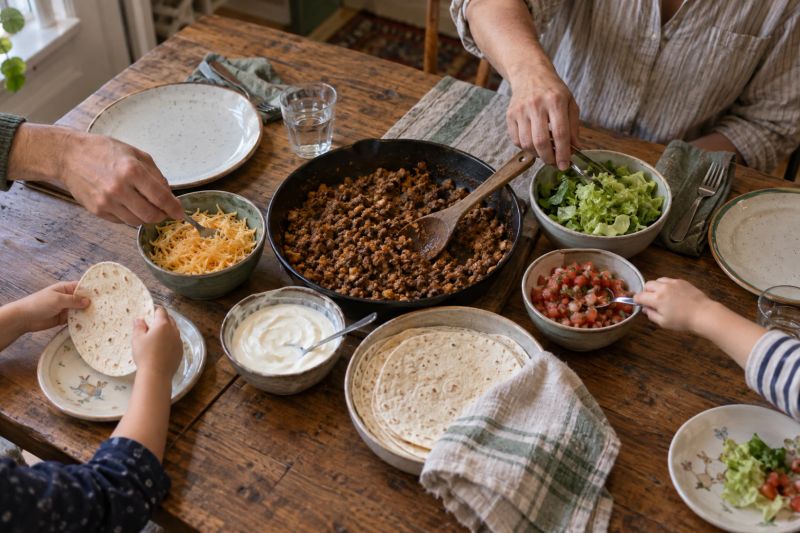
- Build-your-own dinners work best. Tacos, quesadillas, rice bowls and pasta take a pan of chicken or sausage next to the vegetarian filling without changing anything else.
- Cook the meat separately. Use its own pan, so no meat stock or fat ends up in the shared pot.
- Keep it to a few nights. The meat eater gets a side of meat on two or three nights and eats the vegetarian dinner the rest of the week.
Put the meat for those nights on the list as a separate line, so it is easy to leave off in a week where nobody wants it.
Step 5: Write One List That Names the Dinner
Merge the five dinners into one list, group it by aisle, and next to every line write which dinner needs it. If Thursday’s dinner gets moved to next week, you can see what to leave on the shelf.
Our guide to the grocery list by aisle covers the order of the aisles and how to fit it to your store.
A Sample Vegetarian Week
Here is one week of dinners for two adults. Monday is the calm night that cooks the pot of beans and the rice, Tuesday and Wednesday are quick, and Friday cooks a double pot of dal. Soak the bag of dried black beans on Sunday night.
- Monday: black bean chili with rice. Simmer the soaked beans until soft, about an hour. Meanwhile cook the rice for four portions. Make the chili with half the beans, one onion, one pepper, one grated carrot, garlic, one can of crushed tomatoes and chili powder. Serve two portions over half the rice with cheese and yogurt. The other two portions of chili are Tuesday’s lunches. Put the rest of the rice in the fridge for Tuesday and keep the other half of the beans in their liquid for Thursday.
- Tuesday: vegetable fried rice with tofu. Fry the block of tofu in cubes until golden, then fry Monday’s cold rice with two carrots, a few handfuls of frozen peas, half the scallions, garlic, ginger and soy sauce. Push the rice aside and scramble two eggs into it. About 20 minutes.
- Wednesday: shakshuka with naan. Soften an onion and a pepper with garlic, add the second can of crushed tomatoes, some cumin and paprika and a handful of spinach, then crack in four eggs and cover until the whites are set. Serve with two of the naan. About 25 minutes.
- Thursday: black bean quesadillas. Mash the other half of Monday’s beans with a little of their liquid, then fill the 8 tortillas with the beans, cheese, the last pepper, the rest of the spinach and the rest of the scallions to make 4 quesadillas. Serve with yogurt. About 20 minutes.
- Friday: red lentil and carrot dal. Cook half the bag of red lentils with an onion, two grated carrots, garlic, ginger, the can of coconut milk and spices until soft, about 25 minutes. Serve with the last two naan and a spoon of yogurt. That is four portions: two for dinner and two for a weekend lunch.
- Saturday and Sunday: open. One night for leftovers, one night out or for something slower.
Every night has its protein: beans on Monday and Thursday, tofu and eggs on Tuesday, eggs on Wednesday and lentils on Friday, with cheese or yogurt on three of them. The one pot of beans covers two dinners and two lunches, and the rice covers two dinners.
The Grocery List for That Week
Here is the week as one list, grouped by aisle. Each line names the dinners that use it. Check the fridge and the cupboard first and cross off what you already have.
- Produce. 3 bell peppers (Mon, Wed, Thu). 3 onions (Mon, Wed, Fri). 1 bag of carrots (Mon, Tue, Fri). 1 bunch of scallions (Tue, Thu). 1 bag of baby spinach (Wed, Thu). 1 head of garlic (Mon, Tue, Wed, Fri). 1 piece of fresh ginger (Tue, Fri).
- Dairy, eggs and tofu. 6 eggs (Tue, Wed). 1 large bag of shredded cheese (Mon, Thu). 1 large tub of plain yogurt (Mon, Thu, Fri). 1 block of firm tofu (Tue).
- Bakery. 1 pack of 8 flour tortillas (Thu). 1 pack of 4 naan (Wed, Fri).
- Frozen. 1 bag of frozen peas (Tue).
- Canned and pantry. 1 bag of dried black beans (Mon, Thu). 1 bag of red lentils (Fri). 1 bag of long-grain rice (Mon, Tue). 2 cans of crushed tomatoes (Mon, Wed). 1 can of coconut milk (Fri).
That is 19 lines for five dinners and four lunches. Half the lentils, most of the peas and most of the rice are left for next week. Oil, salt, soy sauce, chili powder, cumin, paprika and the other spices are assumed to be in the cupboard; if they are not, add them under canned and pantry.
Keeping a Vegetarian Week on a Budget
A vegetarian week often costs less than a meat week to begin with, and a few habits bring it down further.
- Buy dried beans and lentils. A bag of dried beans costs less per portion than the same beans in cans, and keeps for months. Keep a few cans for the nights you forgot to soak.
- Use one bag of cheese. One large bag of shredded cheese for several dinners costs less than a different cheese for each recipe.
- Buy vegetables that keep. Onions, carrots, cabbage and frozen vegetables last the week, so less of the list ends up in the bin.
- Turn the second pot into lunches. Chili and dal are easy to pack, and each lunch from a planned leftover is one you do not buy.
- Repeat the weeks that work. Cook a good week again two or three weeks later and change one or two dinners.
Where Simmerset Fits
All of this works with a pen and a sheet of paper. The slow part is the list: adding up five recipes, finding what repeats and writing it out in aisle order.
Simmerset does that part, and it can plan a vegetarian week. On the Never suggest card, during setup or later in Preferences, there is a Diet row with a Vegetarian chip. With it selected, the planner only suggests recipes labeled vegetarian; a recipe without that label never makes it into the week. Allergies and diets are entered apart from dislikes. An allergy or a diet takes a recipe out of the plan, and a dislike only moves it down the ranking.
It suggests three to seven dinners and writes one list for the week, grouped by aisle, with amounts added up across dinners where the units allow. Every line says which dinner needs it. Every dinner starts with one serving per person, and you can change the servings of any one dinner; the list changes to match. The diet applies to every dinner in the week, so in a household with a meat eater the meat goes on the side, as in Step 4.
On the Free plan two adults share the household, the week and the list, each on their own phone. There is no retailer account and no store to pick. Simmerset runs in the browser, and there is an iPhone app in the App Store and an Android app on Google Play.
If you are comparing apps, our comparison of meal planning apps that write the grocery list looks at which ones turn a week of recipes into one list.
Frequently Asked Questions
How Do I Get Enough Protein on a Vegetarian Meal Plan?
Give every dinner one protein at its center: beans, lentils, chickpeas, eggs, tofu or cheese. Write it next to each night when you plan, and use each one no more than twice a week. Yogurt and cheese on top add a little more.
Is a Vegetarian Meal Plan Cheaper?
Usually, yes. Dried beans, lentils, eggs and tofu cost less per portion than most meat. The savings come from buying dried pulses, using one cheese across several dinners and turning leftovers into lunches.
How Do I Meal Prep Vegetarian Dinners for the Week?
Cook one pot of beans, lentils or grains on a calm night and use it in two dinners within three days. Cook rice for two dinners and turn the cold half into fried rice the next day. Chop the onions and peppers for two dinners at once.
What If Someone in the House Eats Meat?
Cook the vegetarian dinner as the base and add the meat in a separate pan for whoever wants it. Tacos, quesadillas, rice bowls and pasta work best. Put that meat on the list as its own line.
Can I Use This Plan for a Vegan Week?
Mostly. Swap the eggs for more tofu, and the cheese and yogurt for plant-based versions or a tahini sauce. Simmerset’s planner has no vegan diet to pick, though Discover can filter recipes by Vegan. In the planner, the closest you can get is Vegetarian plus Dairy and Eggs under Never suggest, and that still does not check for honey.