The short version
- Recipe order sends you back and forth across the shop, so write the list in aisle order instead.
- Start from a default order, produce first and frozen last, and fix it after one walk through your shop.
- Counters, bulk bins and anything you have to ask for get their own block at the top.
- Merge the lines that repeat across dinners and tag each one with its dinner.
A recipe lists its ingredients in the order you use them. In a shop that order is worthless. Follow it down the page and you start at the flour, cross to the vegetables, come back for cream, then remember the bread on the far wall. Three recipes and you have walked the building twice.
Rewriting the list in the order the shop is laid out fixes it. Produce sits with produce, cans with cans, frozen comes at the end. You walk once, in one direction, and the list empties from the top.
Why Recipe Order Makes a Bad List
Recipe order is written for the cook. It groups ingredients by step: everything for the marinade, then everything for the sauce. Those groups say nothing about where the items sit on the shelves.
So you backtrack. The list sends you to baking for flour, to the far corner for cilantro, back past the checkout for milk. Every crossing costs a minute and a little patience, and the patience runs out first.
Duplicates slip through too. Two dinners both want an onion, the lines sit twenty apart, and two onions go in the cart when one would have done. The worse version: you spot the second line, assume you already picked it up, and come home with none.
Reading it at the shelf is harder than it needs to be as well. Standing at the dairy case you want to know everything you need from the dairy case, and in recipe order you have to scan the whole page to be sure you have not missed the yogurt.
A Default Aisle Order for Most Supermarkets
Here is an order that fits a lot of shops well enough to start with. Treat it as a draft. Layouts differ by chain, and often between two branches of the same chain, so expect to change it.
- Produce. Fruit, vegetables, herbs, salad. Usually the first thing inside the door, which is why the soft items end up crushed at the bottom of the cart.
- Bakery. Bread, rolls, tortillas, anything out of the in-store oven. Often next to produce, sometimes stranded at the back by the ovens.
- Meat and seafood. The chilled trays, and the counter if your shop has one.
- Deli and cheese. Sliced meats, olives, the cheese counter. Often facing the meat case, which makes the two of them one stop.
- Dairy and eggs. Milk, butter, cream, yogurt, eggs. Usually along a back or side wall.
- Canned and pantry. Cans, jars, pasta, rice, oil, vinegar, stock. The widest section, and worth splitting in two if your list runs long.
- Baking and spices. Flour, sugar, yeast, dried herbs, spices. Sometimes shares an aisle with pantry, sometimes sits on its own.
- Snacks and drinks. Chips, cookies, water, juice, coffee, tea.
- Household. Cleaning, trash bags, foil, paper towels. Easy to forget, because no recipe asks for any of it.
- Frozen. Peas, fish, fries, ice cream.
Frozen sits at the end because cold things should spend as little time as possible in a warm cart, so you pick them up on the way to the checkout.
The only way to get this right for your shop is to walk it once with the order written down and renumber as you go. Do it on a quiet trip, when you are not already late. After that the order is yours and you stop thinking about it.
The Parts That Break the Order
Some parts of a shop do not behave like an aisle. A list that pretends they do will send you back.
- Counters where you take a number. Deli, fish, butcher. The wait has nothing to do with where you are standing, so take the ticket on your way past and shop the next section while the number climbs.
- Bulk bins. Rice, nuts, dried fruit, sometimes spices. They need a bag, a tie and a code written on it, and they are rarely anywhere near the packaged version of the same thing.
- The pharmacy aisle. Pain relievers, bandages, vitamins. In some shops it is an ordinary aisle. In others it is a locked cabinet or a separate register.
- Anything you have to ask for. A cut of meat that is not on the tray, a cake from the bakery case, a bottle kept behind glass. Every one of those is a conversation with a wait attached.
Give all of them their own short block at the top of the list, above the aisles, with the ticket items first. They are the slow ones, and the rest of the shop does not care when you do them.
Turning Several Recipes Into One List
Four dinners give you four ingredient lists, and a lot of those lines are the same line.
- Merge the duplicates and add the amounts. Two dinners that each want half an onion become one line that says one onion, because onions come whole.
- Keep the forms apart. Fresh spinach and frozen spinach are two lines in two different parts of the shop. Same for fresh garlic and garlic powder, or block cheese and grated.
- Write the dinner next to the line. A short tag in the margin does it. When Wednesday falls through you can see which half of the cream and which box of pasta to leave on the shelf.
Some amounts refuse to add up, and that is fine. Half a bag plus two handfuls is a judgement about how much spinach your household eats. Write down whichever number you trust and move on.
Keeping the List Usable for Two Shoppers
Number the aisle groups down the margin, one to ten. That one change turns a single list into two without rewriting anything: one of you takes one to five, the other takes six to ten, and you meet at the checkout.
Write it so whoever is shopping can read it cold. No private shorthand, a brand or a size where it matters, and the dinner tag left in place so an unfamiliar line still makes sense. “Cream, small pot, Thursday pasta” survives the trip. “Cream” does not.
If you split the shop, hand over the counters as one block. Two of you waiting at the same deli counter with two different tickets is the one reliable way to make the trip take longer than doing it alone.
A Printable Template You Can Draw
You can draw this in a minute and photocopy it, or keep one in a notebook and copy it out each week.
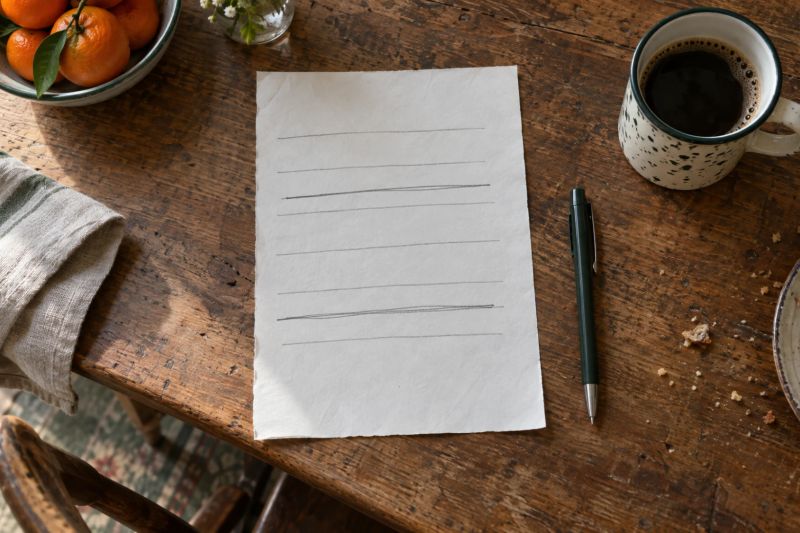
Take a sheet of paper, portrait, and draw one line straight down the middle so you have two columns. In the left column write five headings with a gap under each: produce, bakery, meat and seafood, deli and cheese, dairy and eggs. In the right column write the other five: canned and pantry, baking and spices, snacks and drinks, household, frozen. Number them down the outer margin, one to ten.
Make the gaps uneven, because the sections are. Produce and canned goods want five or six lines each. Bakery, household and frozen want two or three. Adjust after a couple of weeks and then leave it alone.
Leave a narrow strip down the right edge of each column, about a finger wide, for the dinner tag. Put a tick box on the far left of every line, small enough to tick with a cart in the other hand.
Across the top of the page, above the columns, keep a band for the counters and the bulk bins. Below the columns, one spare line for whatever you remember while you are standing in line.
Where Simmerset Fits
Simmerset writes the week’s list already grouped by aisle. Quantities are added up across dinners where the units allow it, and every line names the dinner that needs it, so dropping one meal shows you what to leave on the shelf. There is no retailer account and no store to choose, so you shop the list wherever you like.
The grouping uses broad categories. It is not mapped to any one shop’s layout, so you will still move a few lines to match your branch. What it takes off your hands is the merging and the sorting.
The free tier has no time limit. Plus is USD 4.99 a month or USD 39.99 a year, tax included. It comes from the team behind Spoonacular.
Frequently Asked Questions
What If My Shop’s Order Is Different?
Change the order. The list above is one common shape, and two branches of the same chain often disagree about it. Walk your shop once with the headings written down, renumber them in the order you actually pass them, and use that from then on. One trip buys you years, until the shop refits.
Can I Use One List for Two Shops?
Yes, if you keep the headings fixed and change the numbers. Write the aisle names in one order so the list always looks the same, then keep a numbering for each shop in the back of the notebook or on your phone. You read the same list and walk it in a different order.
What About Seasonal or Specialty Items With No Obvious Aisle?
Give them their own block at the bottom, under a heading like “ask or hunt”. Seasonal displays move every few weeks, and imported or specialty ingredients often sit in a small section of their own instead of with their category. Keeping them separate stops one missing jar from stalling you halfway down an aisle.
A Recipe Needs a Pinch of Something I Already Have. Do I Write It Down?
Write it down, then cross it off before you leave the house. Checking the cupboard is faster than standing in the spice aisle trying to remember whether the cumin jar was nearly empty. A line on the list costs nothing to delete, and it is the only thing that catches the jar with a teaspoon left in it.
How Do I Adjust for a Very Small or a Very Large Trip?
For a quick top up, drop the headings and keep the order. Six items in aisle order still beat six items in the order you thought of them. For a big shop, split the widest sections: produce into fruit and vegetables, canned and pantry into cans and dry goods. Long blocks are where lines get skipped.