The short version
- Mark the busy nights first and give each one a dinner that is ready in about 20 minutes.
- Cook twice on the calm nights, so the busy ones only reheat or assemble.
- Build dinners from one shared base with toppings at the table, so a picky eater can still eat.
- Write one list by aisle with the dinner on every line, and reuse ingredients to keep it short.
Planning dinner for two adults and two children is mostly a scheduling problem. Tuesday and Thursday have swim practice, one child eats four foods, and the recipe says it serves four when two of the four are seven and nine.
This guide is the family version of our weekly meal planning routine. It covers dinners for a household of four, how to size them, how to fit them around the busy nights, and how to feed a picky eater without cooking twice. It ends with one sample week of five dinners and the grocery list that goes with it.
What Changes When You Plan for Four
A plan that works for one or two adults usually breaks in a family for the same few reasons.
- Not every night has the same time. Practice, music lessons or a late shift can take a whole evening. A plan that puts a 45-minute recipe on a soccer night becomes takeout.
- Portions are uneven. A recipe for four assumes four adults. Two adults and two young children eat less than that, and two teenagers eat more.
- Someone will not eat it. One child refuses anything mixed, sauced or green. If every dinner is one finished dish, that child eats bread.
- Lunches need food too. School and work lunches come out of the same fridge, so dinner leftovers are worth planning.
- The list gets long. Five unrelated recipes for four people make a long, expensive list with a lot of half-used packs at the end.
Step 1: Mark the Busy Nights First
Before you choose a single dinner, look at the week. Go through each evening and mark the nights with practice, lessons, a late shift or anything else that leaves less than half an hour to cook. Cross out any night you already know you will eat out.
A typical week has two busy nights, two or three calm ones and a weekend. Plan five dinners for the weeknights and leave the weekend open for leftovers, a takeout night or something slower.
The busy nights get a 20-minute dinner: something already cooked, or something that only needs assembling. The calm nights are where the cooking happens, and that includes cooking for the busy nights.
Step 2: Size Portions for Two Adults and Two Children
Recipes give one number of servings and assume adults. For a family, a rough rule works better: a child under about ten eats around half an adult portion, and from about ten or eleven most children eat as much as an adult.
- Two adults and two young children eat about three adult portions. A recipe that serves four feeds them with one portion left over, which is a lunch.
- Two adults, one younger and one older child eat about three and a half portions. A recipe for four is just enough, so cook a recipe for six when you want leftovers.
- Two adults and two teenagers eat at least four full portions, often more. Scale a recipe for four up to six as a matter of course.
Plan the leftover on purpose. Decide which dinner makes the lunches and put a container next to the pot before you serve.
Step 3: Cook Once for Two Nights
A family week is easier when the calm nights do double work. Cook a double batch on a calm night and let a busy night use the second half.
- Roast twice the meat. Two packs of chicken thighs on Monday make dinner, Tuesday’s quesadillas and a couple of lunch wraps.
- Make a double pot of sauce. A meat sauce made on Wednesday becomes chili on Thursday with a can of beans and some chili powder.
- Cook extra rice or pasta. Cold rice makes better fried rice than fresh rice. Spread it out to cool, get it into the fridge soon after cooking and use it within a day. Plain pasta makes a lunch with whatever sauce is left.
Keep it to one or two of these a week. The second dinner should be different enough from the first that nobody feels they are eating the same thing again. Serve the second dinner within three days of the first, because cooked leftovers keep about three or four days in the fridge.
Step 4: Build Dinners From One Base
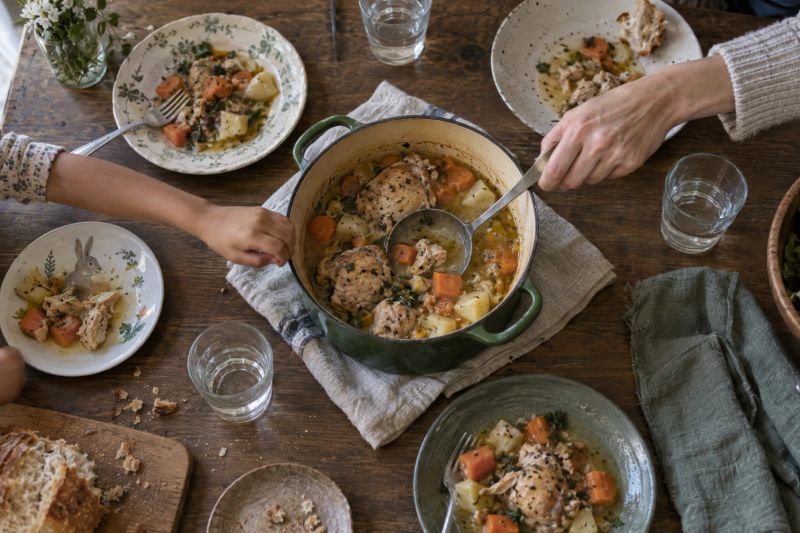
The easiest way to feed a picky eater is to stop serving dinners that are finished in the pot. Cook one base and put the rest on the table, so everyone builds their own plate.
- Tacos and quesadillas. One pan of filling, with the cheese, salsa, beans and vegetables in separate bowls.
- Pasta. Plain pasta for the child who wants it, and sauce for everyone else.
- Rice bowls and chili. Scoop out a plain portion of the base before you add the beans or the spice.
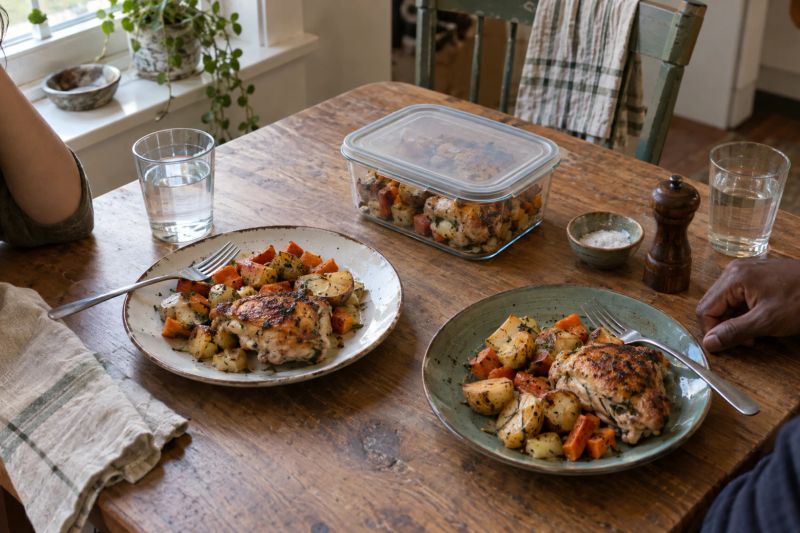
- Sheet pan dinners. Meat, potatoes and vegetables roasted side by side, never touching on the plate.
- Pizza on flatbread. One sauce, one cheese and a few toppings, with every person making their own.
Write the allergies and the true refusals at the top of the plan once. An allergy rules a dinner out. A dislike only means that food goes in its own bowl. Let each child pick one dinner of the week, too, since children tend to eat the dinner they chose.
Step 5: Write One List That Names the Dinner
Merge the five dinners into one list, group it by aisle, and next to every line write which dinner needs it. When Thursday falls apart, you can see what to leave on the shelf or move to next week.
The amounts on the list are the totals for the whole week, rounded up to what the store sells. Our guide to the grocery list by aisle covers the order of the aisles and how to fit it to your store.
A Sample Week of Family Dinners
Here is one week for two adults and two children of seven and nine, with practice on Tuesday and Thursday. Monday and Wednesday are the calm nights that cook twice, Tuesday and Thursday get 20-minute dinners, and Friday is a build-your-own night.
- Monday: sheet pan chicken thighs with potatoes and broccoli. Roast both packs, 12 thighs, on two sheet pans with the potatoes, one head of broccoli and a few cloves of garlic. Dinner takes 6 thighs: two each for the adults and one each for the children. Put 4 thighs in the fridge for Tuesday, and wrap the last 2 in 2 of the tortillas for Tuesday’s lunch boxes, and pack them with an ice pack.
- Tuesday, practice night: chicken and black bean quesadillas. Shred Monday’s 4 thighs and mix them with one can of black beans, one sliced pepper and some of the cheese. The other 8 tortillas make 4 quesadillas. Make one with cheese only if a child wants it plain. Serve with carrot and pepper sticks and some of the yogurt as a dip. About 20 minutes.
- Wednesday: spaghetti with meat sauce, double batch. Brown both packs of ground beef with the 2 onions, garlic and 3 grated carrots, then add 2 cans of crushed tomatoes. Serve half over the spaghetti and put the other half in the fridge for Thursday.
- Thursday, practice night: chili over rice. Start the rice. Scoop out a plain portion of Wednesday’s sauce for the child who wants it, then heat the rest with the second can of black beans and the chili powder. Top it with cheese and yogurt at the table. About 20 minutes, and the leftovers are 2 lunches for Friday, reheated until hot or packed hot in a thermos.
- Friday: build-your-own pizza. Spread the last can of crushed tomatoes on 4 naan, set out the cheese, the pepperoni, the last pepper and the second head of broccoli, and let everyone make their own. About 15 minutes in the oven.
- Saturday and Sunday: open. One night for leftovers, one night out or for something slower.
Most things on the list are used at least twice. The chicken and the meat sauce each cover two dinners and two lunches, and the cheese goes into three dinners.
The Grocery List for That Week
Here is the week as one list, grouped by aisle. Each line names the dinners that use it. Check the fridge and the cupboard first and cross off what you already have.
- Produce. 8 medium potatoes (Mon). 2 heads of broccoli (Mon, Fri). 3 bell peppers (Tue, Fri). 1 bag of carrots (Tue, Wed). 2 onions (Wed). 1 head of garlic (Mon, Wed).
- Meat. 2 packs of 6 bone-in chicken thighs (Mon, Tue). 2 packs of ground beef (Wed, Thu). 1 pack of sliced pepperoni (Fri).
- Dairy. 1 large bag of shredded cheese (Tue, Thu, Fri). 1 large tub of plain yogurt (Tue, Thu).
- Bakery. 1 pack of 10 flour tortillas (Mon, Tue). 1 pack of 4 naan (Fri).
- Canned and pantry. 3 cans of crushed tomatoes (Wed, Fri). 2 cans of black beans (Tue, Thu). 1 box of spaghetti (Wed). 1 bag of long-grain rice (Thu).
That is 17 lines for five dinners and four lunches. Oil, salt, pepper, chili powder and the other spices are assumed to be in the cupboard; if they are not, add them under canned and pantry.
Keeping a Family Meal Plan on a Budget
The biggest saving in a family plan is buying fewer different things. Every extra ingredient is another pack that may come home half used, and every shared one gets used up.
- Reuse ingredients across the week. One bag of shredded cheese for three dinners costs less than three different cheeses. The same goes for one kind of beans, one kind of canned tomatoes and one bread.
- Buy the family pack and plan the rest. Two packs of thighs or two packs of ground beef are cheaper per portion when the second half already has a dinner.
- Turn leftovers into lunches. Each lunch from a planned leftover is one you do not buy.
- Keep one meat-free night. Beans, eggs and cheese cost less than meat, and a bean chili or a cheese quesadilla night lowers the total without anyone noticing much.
- Repeat the weeks that work. Cook a good week again two or three weeks later and change one or two dinners. You keep the list and skip most of the planning.
Where Simmerset Fits
All of this works with a pen and a sheet of paper. The slow part is the list: scaling five recipes, adding up what repeats and writing it out in aisle order.
Simmerset does that part. You tell it how many people eat, and every dinner starts with one serving per person. With young children that is often more than you need, so turn a dinner down to three servings, or leave it at four and take the extra for lunch. The grocery list changes to match. It suggests three to seven dinners and writes one list for the week, grouped by aisle, with amounts added up across dinners where the units allow. Every line says which dinner needs it, so when a practice night goes wrong you can see what to leave on the shelf.
Allergies and diets are entered apart from dislikes. An allergy or a diet takes a recipe out of the plan, and a dislike only moves it down the ranking. On the Free plan both adults share the household, the week and the list, each on their own phone. There is no retailer account and no store to pick. Simmerset runs in the browser, and there is an iPhone app in the App Store and an Android app on Google Play.
If you are comparing apps, our comparison of meal planning apps for families looks at eleven of them on sharing, allergies and the list.
Frequently Asked Questions
How Many Dinners Should a Family of Four Plan Each Week?
Five works for most families: one for each weeknight, with the weekend left open for leftovers, a meal out or something slower. If you eat out more often, plan four. Planning seven usually means two dinners are left over when the week ends.
How Do I Plan Meals for a Picky Eater?
Plan dinners that are built at the table: tacos, pasta with the sauce on the side, rice bowls, sheet pan dinners and flatbread pizza. Keep one part of every dinner plain, let the child pick one dinner a week, and serve a new food next to a familiar one.
What Should We Eat on Busy Activity Nights?
Something that is already cooked or only needs assembling, ready in about 20 minutes: quesadillas from leftover chicken, a sauce reheated into chili, fried rice from cold rice, or eggs and toast. Cook for those nights on a calm night earlier in the week.
How Can a Family of Four Eat on a Budget?
Buy fewer different ingredients and use each one in two or three dinners. Plan the leftovers as lunches, keep one meat-free night, and buy family packs only when the second half already has a dinner. Then repeat the weeks that worked.
Should the Kids Help Plan the Week?
Yes, in a small way. Let each child choose one dinner from a short list of three, and let them build their own plate on taco or pizza night. Children who chose a dinner are more willing to eat it.