The short version
- Check the fridge and the cupboard first, and build two dinners on what is already there.
- Pick dinners that share their ingredients, so nothing is bought for one recipe.
- Cook a cheap staple once and use it twice, and plan the leftovers as lunches.
- Buy once from a list with exact amounts, and make the last dinner of the week use up what is left.
A week of dinners mostly wastes money in three places. Food you already had gets bought again. A recipe needs half a cabbage and the other half rots. And the shopping trip without a list ends with a cart full of things no dinner asked for.
This guide is the budget version of our weekly meal planning routine. It starts from what is already in your kitchen, builds the week on cheap proteins, picks dinners that share their ingredients and turns leftovers into lunches. It ends with a sample week of five dinners for two adults and the grocery list that goes with it. You will find no prices here, because they change from one country and one month to the next, while the habits work anywhere.
What Makes a Week of Dinners Cheap
Most of the saving comes from buying less. The same five dinners can cost very different amounts depending on how you plan them.
- You buy only what the week needs. Every item on the list has a dinner waiting for it.
- Nothing is bought for one recipe. An ingredient that shows up once is where the waste starts.
- Cooking once feeds you twice. A pot of rice or a tray of chicken covers two dinners, or a dinner and a lunch.
- The last dinner clears the fridge. Whatever is left on Friday goes into a dinner instead of the trash.
Step 1: Start With What You Already Have
Before you choose a single dinner, open the fridge, the freezer and the cupboard. Write down what needs using soon and the staples you have plenty of: half a bag of rice, a bag of lentils, a pack of pasta, frozen peas, a few eggs.
Then build at least two dinners on those. If there is rice and a bag of lentils, a dal with rice is already one dinner, and the rest of the rice is the start of a second. The check takes ten minutes and costs nothing.
Step 2: Build Dinners on Cheap Proteins
The protein is usually the most expensive part of a dinner, so choose it first. These are the cheap ones in most stores:
- Dried lentils and beans. Red lentils cook in about 20 minutes with no soaking. Dried beans need a night in water, and a bag goes a long way.
- Eggs. Fried rice, a frittata, a potato tortilla or eggs on toast make a dinner in under half an hour.
- Chicken thighs or a whole chicken. Thighs on the bone usually cost less than breasts, and a whole chicken roasted on Monday gives meat for a second dinner.
- Canned fish. Tuna, sardines and mackerel keep for months and turn a pack of pasta or a pot of rice into dinner.
Use two or three of them in a week, so you can buy each one in a size that gets used up.
Step 3: Pick Dinners That Share Their Ingredients
Choose all the dinners at once, so the same few fresh ingredients show up in several of them.
- One big vegetable for several nights. A cabbage can be roasted on Monday, go into fried rice on Wednesday, become a slaw on Thursday and end up in pasta on Friday.
- Vegetables that keep. Potatoes, onions, carrots and cabbage last the whole week, so the end of the week is not a race against the drawer.
- What is in season. Vegetables in season are usually the cheap ones on the shelf. In fall and winter that means cabbage, roots and squash.
- Frozen for the rest. Frozen peas, spinach and green beans keep for months, and you take out only what a dinner needs.
Step 4: Cook a Staple Once and Use It Twice
Pick one night to cook more than you need. The extra becomes the start of another dinner or the next day’s lunch.
- Rice. Cook enough for two dinners. Cold rice makes better fried rice than fresh rice. Cool it quickly, keep it in the fridge and use it within a day.
- A tray of chicken. Roast a few more thighs than you eat and take the meat off the bones for a second dinner within three days.
- A pot of dal, soup or chili. Cook a double batch. Two portions are dinner, and two are lunches the next day.
Plan those lunches when you plan the dinners, and you will not need to buy one on the way to work.
Step 5: Make the Last Dinner a Use-It-Up Dinner
Leave the last dinner of the week loose on purpose. Plan its base, like pasta, rice, eggs or soup, and fill the rest with whatever is left in the fridge that day: the last of the cabbage, a carrot, a handful of frozen peas.
Buy nothing for the last dinner except its base. If the week went to plan, there is enough left to fill it, and if it did not, the extra goes there.
Step 6: Write a List With Exact Amounts and Shop Once
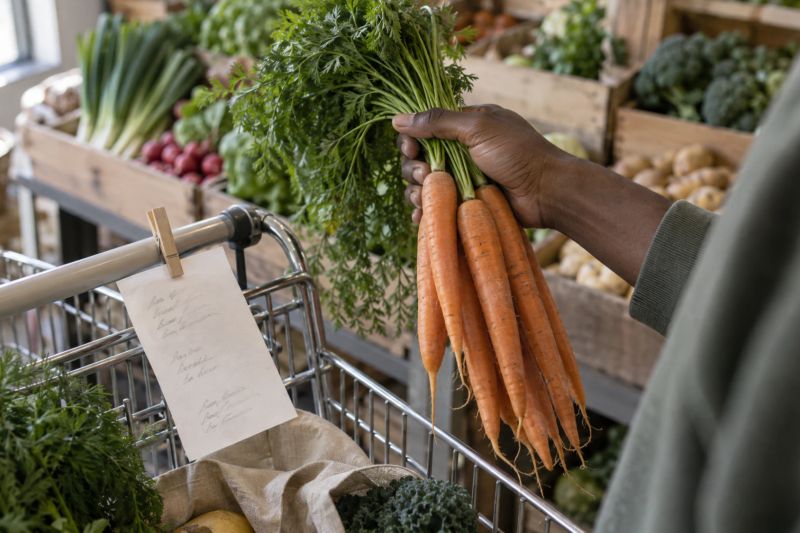
Merge the dinners into one list, group it by aisle and write the exact amount next to every line, with the dinners that need it. Then shop once, from the list only.
Exact amounts stop you from buying a second bag of onions “just in case”. The dinner next to each line tells you what to leave on the shelf if a dinner moves to next week. Shopping once also means walking past the snacks once.
Our guide to the grocery list by aisle covers the order of the aisles and how to fit it to your store.
A Sample Budget Week
Here is one week of dinners for two adults. The check on Sunday found a bag of red lentils and most of a bag of rice in the cupboard, so Tuesday and Wednesday are built on them. One cabbage goes into four of the five dinners.
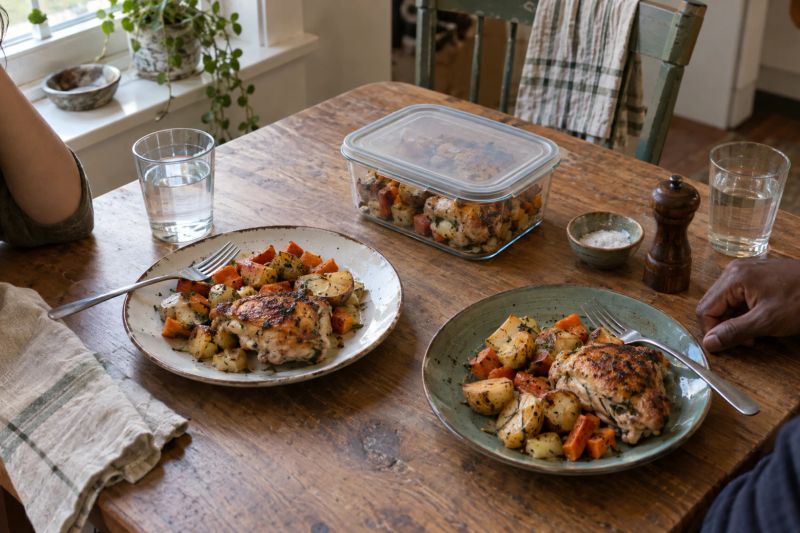
- Monday: roast chicken thighs with potatoes, carrots and cabbage. Roast the 6 chicken thighs with 4 potatoes, 3 carrots, an onion, a few cloves of garlic and a quarter of the cabbage cut into wedges, about 45 minutes. Eat 4 of the thighs. Take the meat off the other 2 and keep it in the fridge for Wednesday.
- Tuesday: red lentil dal with rice. Cook half the bag of red lentils with an onion, 2 grated carrots, garlic, the first can of crushed tomatoes and curry powder, about 25 minutes. Cook rice for 4 portions. Eat 2 portions of dal with half the rice. The other 2 portions of dal are Wednesday’s lunches, and the rest of the rice goes in the fridge.
- Wednesday: chicken fried rice. Shred a quarter of the cabbage, then fry it with Tuesday’s cold rice, Monday’s chicken, a carrot, a few handfuls of frozen peas, garlic and soy sauce. Push the rice aside and scramble 2 eggs into it. About 20 minutes.
- Thursday: potato tortilla with cabbage slaw. Slice 4 potatoes and an onion, cook them slowly in oil until soft, then set them in 6 beaten eggs. Shred a quarter of the cabbage with a grated carrot, oil and vinegar for the slaw. About 40 minutes. Two wedges of tortilla are left for Friday’s lunches.
- Friday: the use-it-up pasta. Cook half the pack of spaghetti. Soften an onion with garlic and the last quarter of the cabbage, add the second can of crushed tomatoes, the 2 cans of tuna and any frozen peas or carrots that are left. About 25 minutes.
- Saturday and Sunday: open. One night for the 4 eggs left over and whatever else is in the fridge, and one night free.
Every dinner has a cheap protein: chicken on Monday and Wednesday, lentils on Tuesday, eggs on Wednesday and Thursday, and tuna on Friday. The tray of chicken covers two dinners, the rice covers two dinners, and the dal and the tortilla give 4 lunches.
The Grocery List for That Week
Here is the week as one list, grouped by aisle. Each line names the dinners that use it. The lentils and the rice came from the cupboard, so they are not on it.
- Produce. 1 bag of potatoes, about 8 (Mon, Thu). 1 head of cabbage (Mon, Wed, Thu, Fri). 1 bag of carrots (Mon, Tue, Wed, Thu, Fri). 4 onions (Mon, Tue, Thu, Fri). 1 head of garlic (Mon, Tue, Wed, Fri).
- Meat. 1 pack of 6 bone-in chicken thighs (Mon, Wed).
- Dairy and eggs. 12 eggs (Wed, Thu).
- Frozen. 1 bag of frozen peas (Wed, Fri).
- Canned and pantry. 2 cans of crushed tomatoes (Tue, Fri). 2 cans of tuna (Fri). 1 pack of spaghetti (Fri).
That is 11 lines for five dinners and 4 lunches. Half the spaghetti, most of the peas, a carrot or two and 4 eggs are left for the weekend and next week. Oil, salt, pepper, vinegar, soy sauce and curry powder are assumed to be in the cupboard; if they are not, add them under canned and pantry.
Where Simmerset Fits
All of this works with a pen and the back of an envelope. The slow part is the list: adding up five recipes, finding what repeats and writing it out in aisle order.
Simmerset does that part. It suggests three to seven dinners and writes one list for the week, grouped by aisle, with amounts added up across dinners where the units allow. Every line says which dinner needs it, so if you drop a dinner you can see what to leave on the shelf. Every dinner starts with one serving per person, and you can change the servings of any one dinner; the list changes to match. Your own cheap standbys can go on the week too: a recipe you imported or typed in can go on any day, and its ingredients join the same list.
On the Free plan two adults share the household, the week and the list, each on their own phone. There is no retailer account and no store to pick. Simmerset runs in the browser, and there is an iPhone app in the App Store and an Android app on Google Play.
It has limits for a budget week. Simmerset shows no prices and does not compare stores, so the unit prices on the shelf are still yours to check. It also does not know what is in your cupboard, so Step 1 stays a job for you.
Our vegetarian meal plan shows a cheap week without meat, built on beans, lentils and eggs.
Frequently Asked Questions
What Are the Cheapest Proteins for a Budget Meal Plan?
In most stores: dried lentils and beans, eggs, chicken thighs or a whole chicken, and canned fish such as tuna or sardines. Prices differ by country and season, so compare the unit price on the shelf label rather than the price of the pack.
Does Meal Planning Really Save Money?
It usually does, for three reasons. You buy only what the week’s dinners need, the food you already have gets used, and fewer evenings end in takeout because nobody knew what was for dinner. How much it saves depends on how you shopped before.
How Do I Make a Budget Meal Plan for One?
Use the same steps, but plan for the packs. Cook four portions of a dinner, eat one, take one for lunch and freeze two. Choose dinners that use a whole pack of chicken or a whole cabbage between them, because small packs usually cost more per portion than large ones.
Are Frozen Vegetables Cheaper Than Fresh?
Sometimes, depending on the vegetable and the store. Where they save money is waste: you take out only what you need and the rest keeps for months. Fresh vegetables in season are usually the cheaper choice for the ones you will use within a few days.
How Do I Plan Cheap Meals With What I Already Have?
Check the fridge, the freezer and the cupboard before you choose any dinner. Build two dinners on what needs using and on the staples you have plenty of, then plan the rest of the week around them, and leave the last dinner of the week for whatever is left.